



2026 practical guide · Press relations · Media resources
Press kit examples that make a journalist’s job easier
A strong press kit is not a glossy corporate brochure. It is a fast, verifiable and well-organised source of facts, images, biographies, quotes and contact details that a journalist can use without wasting time or guessing what is current.
What is a press kit?
A press kit, also called a media kit, is a curated set of background information and downloadable assets designed to help journalists cover an organisation, person, product, event or announcement. It usually contains a concise company profile, key facts, recent press releases, executive biographies, high-resolution images, logos, useful documents and a named media contact.
One clear purpose
Build the kit around a media use case: corporate profile, launch, event, research, executive or crisis response.
Verifiable facts
Dates, names, figures, claims and quotations must be attributable and easy to confirm.
Downloadable assets
Provide original files in useful formats rather than screenshots, compressed previews or locked documents.
Visible ownership
Show who maintains the kit, when it was updated and who journalists should contact.
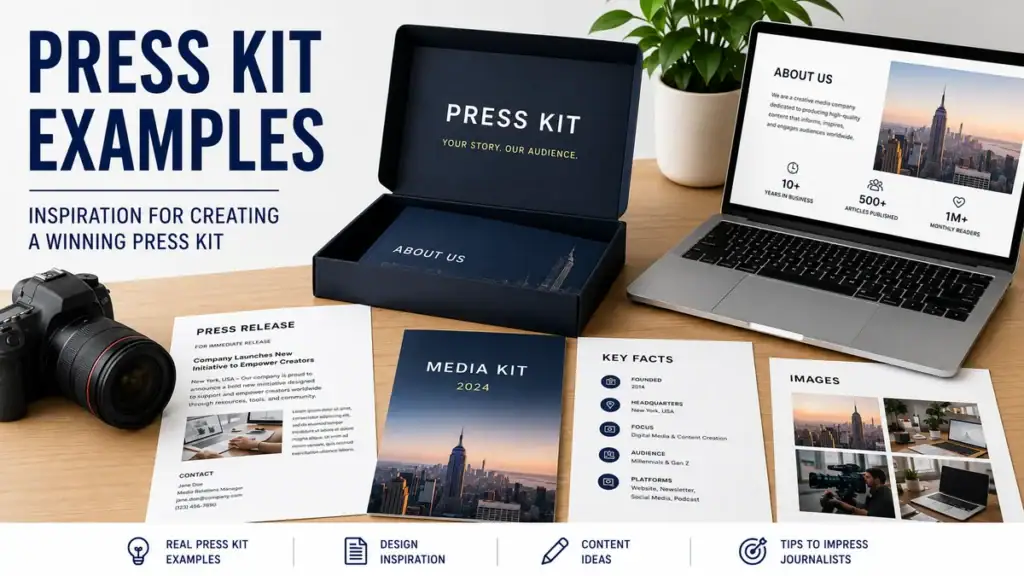
Press kit definition and purpose
A press kit complements a press release. The release announces one specific piece of news; the kit supplies the context and assets needed to understand, verify and illustrate that news. It can also operate as an always-on corporate media resource, even when no campaign is active.
Typical use cases include product launches, company openings, funding rounds, conferences, mergers, research publications, executive appointments, cultural events, public-interest campaigns and crisis updates.
Expert advice from 24Presse
Build the kit backwards from the journalist’s likely questions. What is new? Why does it matter? Who can confirm it? Which facts are safe to publish? Which visual can legally be reproduced? A kit that answers those questions quickly is more valuable than a longer document filled with marketing language.
For the journalist
Less research friction, fewer clarification emails, usable visuals and a clear route to the right spokesperson.
For the organisation
More accurate brand descriptions, consistent figures, fewer obsolete logos and better control of official source material.
For search and AI systems
Clear entities, dates, roles, source links and structured sections make official information easier to identify and cite.
Press kit vs press release, media kit, pressbook and online newsroom
| Format | Main purpose | Typical content | Best use | Update rhythm |
|---|---|---|---|---|
| Press release | Announce one news event | Headline, lead, facts, quotes, boilerplate, contact | Launch, appointment, study, partnership, event | One document per announcement |
| Press kit / media kit | Provide background and assets | Factsheet, biographies, images, logos, releases, contacts | Support coverage and interviews | Review after every material change |
| Pressbook | Show previous work or coverage | Clippings, portfolio, appearances, references | Creative profiles, speakers, artists, agencies | After meaningful new coverage |
| Press review | Compile published mentions | Articles, broadcasts, links, summaries | Reporting and reputation monitoring | Daily, weekly or campaign-based |
| Online newsroom | Centralise current official information | News archive, kits, contacts, multimedia, policies | Organisations with recurring media activity | Continuous |
How press kits evolved
Printed folders
Press officers assembled paper biographies, photographs, brochures and releases for press conferences, trade shows and launches.
CD-ROMs, DVDs and email attachments
Digital files reduced printing but created version-control, compatibility and attachment-size problems.
PDF kits and cloud folders
Shareable links improved access, although large single PDFs often remained difficult to update and reuse.
Online media centres
Responsive pages made facts, releases, image libraries and contacts searchable and independently downloadable.
2026: multi-format, rights-aware and AI-readable
The strongest kits combine human-readable summaries with original files, precise metadata, usage rights, transcripts and stable official URLs.
Real press kit examples and what to learn from them
The best examples are not necessarily the most visually elaborate. They succeed because information is current, assets are clearly labelled and the user can move from overview to source file in a few clicks.
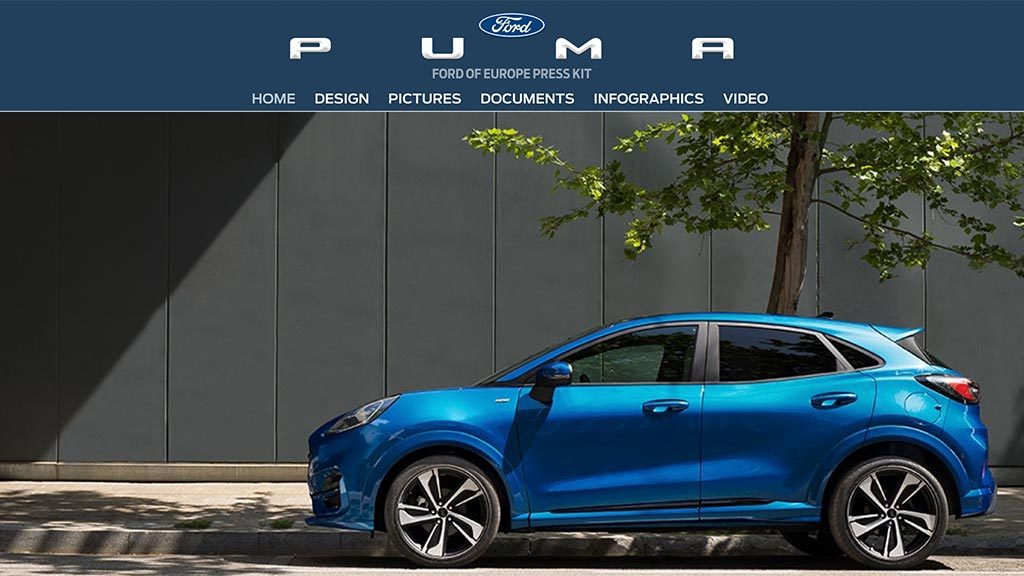
Apple Newsroom
Useful lesson: clear chronology, strong editorial imagery, product facts and a consistent official source.
NASA mission press kits
Useful lesson: downloadable PDFs, galleries, media reels, captions, credits and technical background organised by mission.
NASA/JPL gallery model
Useful lesson: separate image, video and media-service pages make assets easier to locate and reuse.
WHO Newsroom
Useful lesson: media contacts, press conferences, releases and multimedia are grouped in one authoritative public-interest resource.
What should a professional press kit include?
| Component | Status | What to provide | Quality test |
|---|---|---|---|
| Media contact | Required | Name, role, direct email, phone, availability and time zone where relevant | A journalist can reach a real person quickly |
| Company overview | Required | What the organisation does, for whom, where and since when | Can be understood in under one minute |
| Factsheet | Required | Verified dates, figures, locations, legal name, leadership and milestones | Every number has an owner and update date |
| Recent press releases | Required | Current announcements in HTML and downloadable format | Newest first; obsolete information archived |
| Leadership biographies | Highly useful | Short and long bios, exact titles, expertise and approved headshots | Names and roles match all official channels |
| Logos | Highly useful | SVG and transparent PNG, light/dark variants, clear-space guidance | No screenshot or low-resolution copy required |
| Photography | Highly useful | High-resolution originals, captions, dates, locations, credits and rights | Each file can be published with correct attribution |
| Video and B-roll | As relevant | Broadcast-quality clips, shot list, transcript, captions and rights | Editors can identify and license each clip |
| Research data | As relevant | Methodology, sample, dates, tables and machine-readable files | Claims can be independently checked |
| Previous coverage | Optional | Selected, relevant and properly attributed media references | It supports context without becoming a vanity archive |
The minimum viable press kit
- One concise overview
- One current factsheet
- One named media contact
- Approved logos and two or three strong images
- Recent press releases
- Clear image and quotation rights
Choose the right press kit for the use case
| Use case | Primary story | Priority assets | Common omission |
|---|---|---|---|
| Corporate kit | Who the organisation is | Profile, leadership, milestones, offices, brand assets | Current ownership or legal information |
| Product launch kit | What is launching and why it matters | Specifications, pricing, availability, images, demo, spokesperson | Exact launch date and market availability |
| Startup or funding kit | Growth, funding and market problem | Founders, funding facts, investors, customer evidence, product visuals | Separating verified traction from forecasts |
| Event kit | What happens, where and when | Programme, speakers, accreditation, venue, schedules, visuals | Media access instructions and deadlines |
| Research kit | New findings | Executive summary, methodology, dataset, charts, experts, limitations | Sample definition and fieldwork dates |
| Executive profile kit | Who the spokesperson is | Biography, expertise, topics, quotes, headshots, interview availability | Approved pronunciation and exact job title |
| Crisis kit | Verified current position | Holding statement, chronology, contacts, evidence, update log | Timestamp and clear distinction between known and unknown facts |
How to create a press kit step by step
Define the media audience
List the journalist profiles, markets, languages and publication formats the kit must serve.
Choose one editorial purpose
Decide whether the kit supports a launch, corporate profile, event, research result or recurring newsroom.
Audit the evidence
Check every name, role, date, figure, quotation, claim and source before writing.
Write the core summary
Explain who, what, where, when, why and how in factual, non-promotional language.
Prepare reusable assets
Create original image, logo, chart, transcript and video files with captions, credits and rights.
Organise the information
Use predictable labels, a logical hierarchy and separate download links for each asset.
Test access
Open the kit on mobile, in a private browser and on a slower connection. Remove login and permission barriers.
Obtain approval
Confirm legal, brand, executive and data approvals without turning the text into advertising copy.
Publish and maintain
Use a stable URL, assign an owner and record the latest review date.
Practical workflow used in media relations
Send the release first, then link to the press kit for depth. Avoid attaching a large archive to the initial email. The journalist should be able to understand the story from the pitch or release and open the kit only for background, visuals or verification.
Recommended files and technical formats
| Asset | Recommended formats | Include | Avoid |
|---|---|---|---|
| Overview / factsheet | HTML + accessible PDF | Version date, selectable text, links, contact | Scanned PDFs and text embedded only in images |
| Logo | SVG + transparent PNG | Colour, monochrome, light and dark versions | JPEG logos and screenshots |
| Photography | JPEG or WebP for web; original high-resolution file for download | Caption, subject, location, date, credit, rights | Unlabelled files and social-media screenshots |
| Charts | SVG/PNG + source table in CSV/XLSX | Title, units, period, source and methodology | Charts without values or readable labels |
| Video / B-roll | MP4 plus downloadable master where needed | Duration, shot list, transcript, captions, credit | Autoplay, watermarks covering the subject, unclear rights |
| Audio | WAV/MP3 + transcript | Speaker, date, context, pronunciation guide | Audio without a text alternative |
| Data | CSV/XLSX + methodology PDF/HTML | Definitions, sample, collection dates, limitations | Percentages without denominators or source notes |
Do not place every asset in one large PDF
A PDF can provide a convenient summary, but journalists should also be able to download the logo, portrait, chart, release or video independently. Individual files reduce editing friction and make version updates safer.
UX and design principles for a modern media kit
Make priority visible
Put the current announcement, key facts and contact near the top. Do not force journalists through a corporate history before showing the news.
Use descriptive labels
“Download CEO portrait — landscape — credit Jane Doe” is more useful than “IMG_2048.jpg”.
Design for scanning
Short summaries, tables, clear headings, dates and download cards outperform long uninterrupted paragraphs.
Respect mobile users
Controls, tables, images and file links must remain usable on a phone without horizontal page scrolling.
Keep access open
A journalist should not need an account, marketing consent or a sales conversation to obtain standard media assets.
Show freshness
Display update dates and remove former executives, expired product information and obsolete brand assets.
How a press kit supports SEO, Google Discover and AI visibility
A press kit is primarily a media-relations resource, not an SEO trick. Its search and AI value comes from publishing an authoritative, well-maintained source that clearly identifies people, organisations, products, dates, figures and original assets.
| Area | Good practice | Why it helps |
|---|---|---|
| Entity clarity | Use exact legal and public names, roles, locations and official links consistently | Reduces ambiguity for search engines, journalists and AI systems |
| Answer-first writing | Place concise definitions and factual summaries before detailed explanation | Improves scanning, snippets and machine extraction |
| Original evidence | Publish methodology, source files, dates and limitations with any data | Strengthens trust and citation potential |
| Images | Use standard HTML image elements, descriptive filenames, alt text, captions and high-resolution originals | Improves accessibility, image understanding and visual discovery |
| Stable URLs | Keep a permanent newsroom or kit URL and update content in place | Preserves references and makes the official source easy to rediscover |
| Human accountability | Name the author, reviewer, media contact and last-update date | Provides visible editorial responsibility |
Image visibility and Google Discover
Google Search Central recommends standard <img> elements, descriptive alt text, responsive images and high-quality visuals. It also advises publishers to specify a representative preferred image through metadata such as og:image or primaryImageOfPage. The page’s existing 1200 × 675 WebP image is suitable as a large 16:9 editorial preview when correctly configured in Yoast.
AI-readiness checklist
- Short definitions written in direct language
- Tables that connect terms, facts and use cases
- Dates and version information beside time-sensitive claims
- Named sources and links to original evidence
- Consistent organisation and executive names
- Text transcripts for audio and video
- Accessible original data where research is cited
Frequent press kit mistakes and how to fix them
| Mistake | Why it creates friction | Better approach |
|---|---|---|
| No named press contact | Journalists cannot verify details or request interviews | Show a direct media contact and backup contact |
| Outdated leadership biographies | Creates factual errors and damages trust | Assign an owner and review after every role change |
| Low-resolution images | Cannot support print, broadcast or strong digital presentation | Offer web previews plus original downloadable files |
| Missing credits or rights | Editors may avoid assets they cannot safely publish | State creator, copyright owner, usage terms and required credit |
| Marketing superlatives | Forces reporters to rewrite or reject unsupported claims | Use measurable facts and attributable quotations |
| One giant ZIP file | Hides contents and increases security concerns | Offer individual downloads with an optional ZIP |
| Login or lead form | Introduces delay and privacy friction | Keep standard media information publicly accessible |
| Data without methodology | Figures cannot be evaluated or cited responsibly | Publish sample, fieldwork, definitions and limitations |
| Broken links and expired cloud permissions | Assets disappear when the story is live | Use stable owned URLs and scheduled link checks |
| No update date | Users cannot distinguish current facts from archive material | Display “last reviewed” dates on the page and key files |
Press kit maintenance schedule
| Frequency | Checks | Owner |
|---|---|---|
| Before every campaign | Headline facts, spokesperson, contact, release links, campaign visuals and rights | PR lead or press officer |
| Monthly | Broken links, file permissions, current contact availability and latest releases | Communications operations |
| Quarterly | Leadership roles, factsheet figures, product availability, selected coverage and translations | Communications + subject owners |
| After a material change | Legal name, ownership, executive team, pricing, brand identity, locations or policy | Relevant business owner + communications |
| Annually | Full editorial, accessibility, image-rights, SEO and archive review | Editor, legal, brand and web team |
Complete press kit checklist
Editorial and trust
- The purpose and media audience are defined
- The opening summary answers the essential questions
- All names, roles, dates and figures are verified
- Claims are factual or clearly attributed
- Quotes add interpretation rather than enthusiasm
- A real media contact is displayed
- The last review date is visible
- Outdated information is archived or removed
- Research includes methodology and limitations
- Translations are reviewed by a competent speaker
Assets and user experience
- Logos are available in SVG and transparent PNG
- Images include captions, credits and rights
- High-resolution originals are downloadable
- File names describe their contents
- Each asset is available separately
- Video includes a transcript or captions
- Charts include source data and units
- The page works on mobile
- No login is required for standard assets
- Links and permissions have been tested
Search and AI clarity
- The page has one clear H1 generated by WordPress
- Headings follow a logical H2/H3 hierarchy
- Definitions appear before long explanations
- Official entity names are consistent
- Images use descriptive alt text
- A representative large image is configured in Yoast
- Internal links connect to relevant 24Presse guides
- External claims link to original sources
- No duplicate FAQPage or Article schema is added
- The canonical URL remains unchanged
Final newsroom test
- No dead cloud links
- No former executive presented as current
- No screenshot used in place of an original logo
- No unsupported “leading”, “unique” or “revolutionary” claim
- No chart without source and date
- No image without a credit decision
- No oversized attachment required to understand the story
- No contact form as the only media route
- No hidden publication restrictions
- No mixed versions of the same fact
Press kit and media-relations data: 2025–2026
The figures below are included only where an identifiable, current and authoritative source is available. They explain why relevance, verifiability, multimedia and official source material matter.
Journalists using PR content for story ideas
Cision’s 2026 State of the Media research reports that 66% of journalists rely on PR-provided content, including pitches, press releases and media kits, for story ideas.
Irrelevant pitches rejected
Cision’s 2025 report found that 86% of journalists immediately reject a pitch that does not match their beat or audience.
Press releases remain useful
In the same 2025 research, 72% of journalists cited press releases as the most useful resource PR teams can provide.
News access through social and video networks
The Reuters Institute’s 2026 Digital News Report says 54% of respondents across 48 markets use social media and video networks for news.
Weekly online news video use
The 2026 Reuters Institute report states that 77% of people globally consume online news video each week, reinforcing the value of usable video and B-roll.
Weekly AI chatbot use for news
Reuters Institute data show weekly AI-chatbot use for news rising from 7% to 10%, making clear, attributable official information increasingly important.
How to interpret these figures
They do not prove that a press kit guarantees coverage. They show that journalists use PR-provided material while operating in a fragmented, multi-format information environment. Relevance, accuracy, original evidence and easy access remain the controllable factors.
Press kit glossary
| Term | Definition |
|---|---|
| Boilerplate | A short, approved description of an organisation, usually placed at the end of a press release. |
| B-roll | Supplementary video footage that broadcasters and editors can use to illustrate a report. |
| Caption | Text identifying what an image shows, including relevant people, location, date and context. |
| Credit line | The wording required to identify the creator or rights holder of an asset. |
| Embargo | An agreement that information may not be published before a specified date and time. |
| Factsheet | A concise document containing verified core facts and figures. |
| Holding statement | A short initial statement issued while a situation is developing and full facts are not yet available. |
| Media contact | The named person authorised to answer press questions and arrange interviews. |
| Media kit | A common synonym for press kit; in advertising, the same term can also describe audience and sponsorship information. |
| Media room / newsroom | An online hub containing current and archived official information for journalists. |
| Pressbook | A curated portfolio of previous coverage, appearances or professional work. |
| Press release | A structured announcement of one newsworthy development. |
| Rights statement | Information explaining how an image, video, logo or document may be used. |
| Spokesperson | A person authorised to speak publicly on behalf of an organisation or project. |
| Style guide | Rules governing the correct use of logos, colours, typography, names and brand elements. |
24Presse methodology and editorial approach
This guide combines practical media-relations observations from 24Presse, founded in 2009, with a review of the page’s existing examples and links, current industry research and official search documentation.
Practical review
We evaluate whether a journalist can understand, verify, illustrate and follow up the story without unnecessary friction.
Source discipline
Statistics are retained only when the original report, publisher or official documentation can be identified.
Editorial limits
No press kit, distribution service or SEO technique can guarantee editorial coverage, links, ranking, Discover inclusion or citation by an AI system.
Related 24Presse guides
Press Release Distribution Service
How professional review, targeting, approval and distribution work.
Press release examples and sample press releases
Practical structures and examples for different announcements.
Press release: guidelines and tips
Core rules for writing factual, usable media content.
How to send a press release
Targeting, timing, outreach and follow-up principles.
Professional press release writing
Editorial support when the announcement needs restructuring or rewriting.
Press release examples and models
Additional templates and formats to support the press kit.
Frequently asked questions about press kit examples
Press kit basics and formats
1. What is a press kit?
A press kit is a collection of verified background information and downloadable media assets that helps journalists cover an organisation, person, product, event or announcement.
2. Is a press kit the same as a media kit?
Usually, yes. In PR, both terms describe media resources. In advertising, “media kit” can also mean audience, advertising and sponsorship information.
3. What is the difference between a press release and a press kit?
A press release announces one specific news event. A press kit provides wider context, official facts, images, biographies and supporting documents.
4. What should a basic press kit contain?
Include a company overview, factsheet, media contact, recent releases, approved logos, useful images, captions, credits and rights information.
5. How long should a press kit be?
There is no fixed length. Keep the summary concise and let users open or download deeper material only when needed.
6. Should a press kit be a PDF or a web page?
An accessible web page is easier to update and search. A PDF can be offered as a portable summary, but important assets should also be downloadable separately.
Relevance, ownership and timing
7. Are press kits still relevant in 2026?
Yes. Journalists still use PR-provided information for story ideas, verification, context, images and expert access.
8. Who should create a press kit?
A press officer, PR agency or communications team usually leads the work, with input from subject experts, executives, legal, brand and design teams.
9. When should a company create a press kit?
Create one before recurring media outreach, a major launch, event, funding announcement, research publication, executive campaign or crisis scenario.
10. What makes a good press kit example?
It is current, factual, easy to navigate, visually usable, openly accessible and clear about contacts, captions, sources and rights.
11. Do journalists prefer downloadable assets?
Yes. Separate, clearly labelled files are easier to reuse than screenshots, embedded previews or one large locked document.
Images, video, coverage and startups
12. What image formats should a press kit provide?
Offer high-resolution JPEG or WebP photography, transparent PNG logos and SVG logos where vector use is appropriate.
13. What information should accompany each image?
Add a descriptive filename, caption, people or products shown, location, date, photographer or creator, required credit and usage rights.
14. Should a press kit include video?
Include video when it helps explain or illustrate the story. Add a shot list, duration, transcript, captions, credits and usage terms.
15. Should a press kit include previous media coverage?
Selected relevant coverage can add context, but it should not dominate the kit or replace current facts and original assets.
16. Can a startup use a press kit?
Yes. A startup kit can clarify the problem, solution, founders, funding, traction, markets, evidence, product visuals and media contacts.
Press kits by announcement type and access
17. What belongs in a product launch press kit?
Include launch date, availability, pricing, specifications, verified differentiators, product images, demo material, quotations and support contacts.
18. What belongs in an event press kit?
Provide dates, venue, programme, speakers, accreditation, schedules, maps, contact details, visuals and post-event asset information.
19. What belongs in a research press kit?
Include the executive summary, methodology, sample, collection dates, findings, limitations, charts, source data and available experts.
20. How often should a press kit be updated?
Review it before every campaign, after any material change and at least quarterly for contacts, roles, figures, links and assets.
21. Should access require a form or registration?
Standard media information should normally be public. Forms and logins create friction and may stop time-pressed journalists from using the kit.
SEO, Discover, AI, keywords and mistakes
22. Can a press kit improve SEO?
It can strengthen an official information source through clear facts, images, internal links and authoritative content, but it cannot guarantee rankings or backlinks.
23. Can a press kit help Google Discover visibility?
A relevant high-quality image, current editorial content and good page experience can support eligibility, but Google does not guarantee Discover inclusion.
24. How does a press kit help AI search tools?
Clear definitions, stable URLs, named entities, dates, source links and well-structured facts make official information easier to interpret and cite.
25. Should a press kit contain keywords?
Use the natural names of the organisation, product, sector and topic. Avoid repetitive keyword insertion that makes the text less credible.
26. What is the biggest press kit mistake?
The most damaging mistake is presenting outdated or unverifiable information as current. Missing contacts and unclear image rights are also frequent problems.
Brand guidelines, files, results and hosting
27. Should a press kit include brand guidelines?
Yes, especially when logo treatment, colours, product names or trademarks require specific usage rules.
28. Should press kit assets be zipped?
An optional ZIP is useful for bulk download, but every important file should also be available individually with a clear label.
29. Does a press kit guarantee media coverage?
No. Editorial decisions remain independent. A strong kit improves access, accuracy and usability, not the certainty of publication.
30. Where should a press kit be published?
Publish it on a stable, public URL within the organisation’s official website, ideally in a newsroom or media section.
Sources and further reading
- Cision — 2026 State of the Media findingsNearly 2,000 journalists across 19 markets; includes the finding that 66% rely on PR-provided content for story ideas.
- Cision — 2025 State of the Media findingsMore than 3,000 journalists; includes the 86% relevance and 72% press-release findings.
- Reuters Institute — Digital News Report 2026Audience research across 48 markets covering news access, video, AI chatbots, trust and platform use.
- Google Search Central — Image SEO best practicesOfficial guidance on image discovery, HTML image elements, alt text, quality, responsive images and metadata.
- Google Search Central — Image license metadataOfficial guidance for creator, credit and licensing information in Google Images.
- Cision — 2025 State of the Media report pageThe useful external source retained from the original page.
Conclusion: make the official source easier to use than the unofficial one
A press kit succeeds when a journalist can understand the story, verify the facts, download the right asset and reach the right person in minutes. The objective is not to say more than competitors; it is to remove uncertainty and make accurate coverage easier.